Treatment
Dental Implants in Mesa, AZ
You're missing a tooth, or about to lose one, and you'd rather not have something you take out at night.
It's a titanium post placed where the root used to be, left to fuse with the bone, then fitted with a crown made to match the teeth around it.
The treatment
What a dental implant actually is
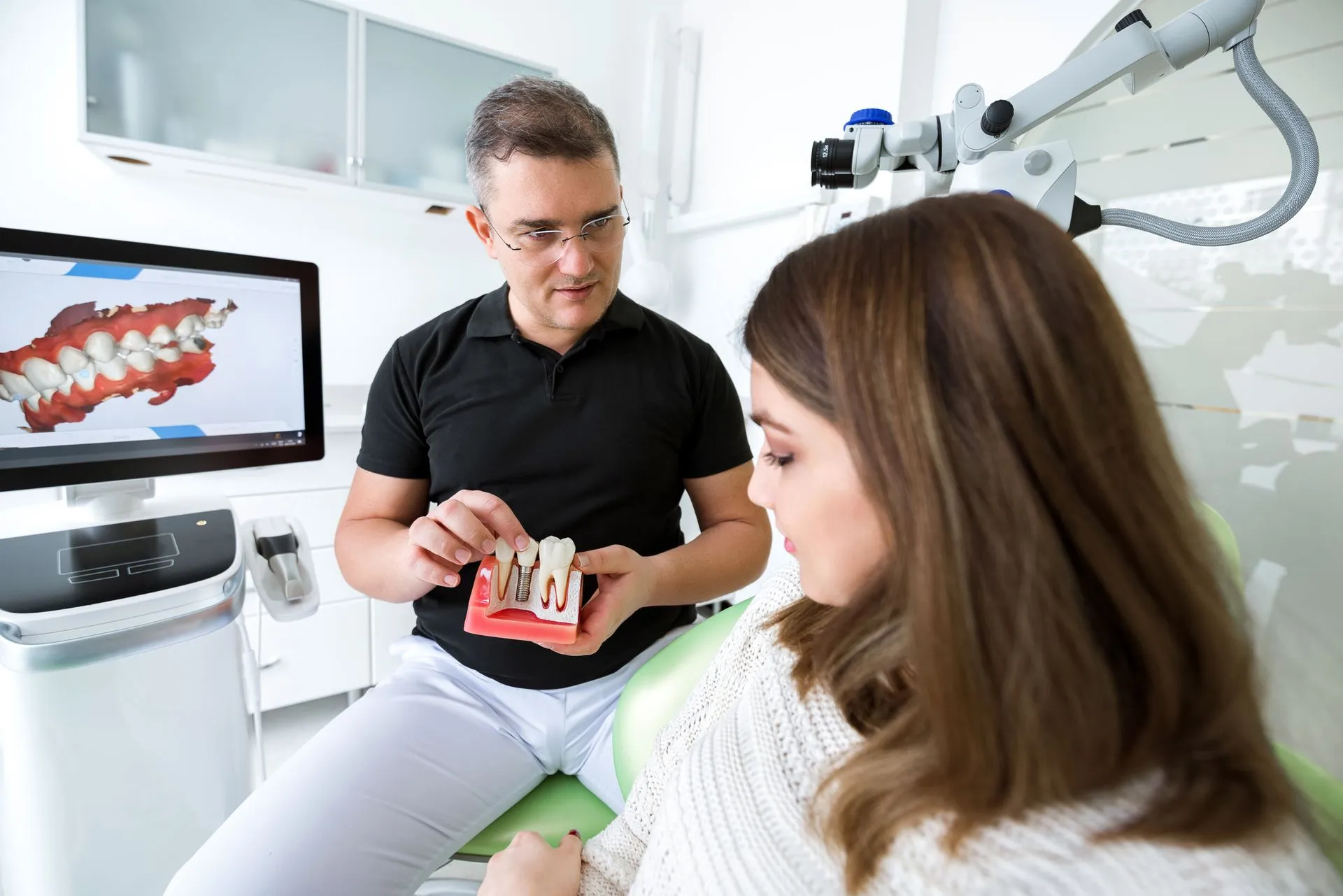
Most tooth replacements sit on top of the gum. An implant doesn't. It's a small titanium post placed into the jawbone where the root of the tooth used to be, left to fuse with the bone, and then fitted with a crown made to match the teeth around it.
That's what makes the difference. Because the post is anchored in bone rather than resting on gum, it holds a bite the way a natural root does, and it doesn't rely on the neighboring teeth for support. It's also the reason the process takes months rather than a single visit. Bone needs time to grow around the post before we load anything onto it.
Living with it afterward
Once it has settled you should largely forget it's there. Brush it, floss around it, and keep your check-ups. The implant can't decay, but the gum and bone holding it can be lost to the same plaque that causes gum disease around natural teeth. That, rather than the implant failing on its own, is what usually causes problems years later, and it's preventable.
Good to know
A replacement root, not just a replacement tooth
Fixed in place, nothing to take out at night
Cleaned like a natural tooth
Done in stages, with healing time between
What to expect
Four stages, spread over a few visits.
01
We take a proper look
An exam and X-rays, so we can see how much bone you have and where the nerves and sinuses sit. If anything else needs treating, we deal with that first.
02
We place the post
We put the post into the bone under local anesthetic, and you go home the same day.
03
Then we wait
Your bone grows around the post. This is the slow part, and there's no rushing it. If the tooth shows when you smile, we won't leave you with a gap.
04
We fit your crown
Once the post is solid, we fit the abutment and the crown, and match them to the teeth either side.
Candidacy
Is an implant right for you?
Some of these point toward an implant and some point away from one. If it isn't the sensible option for your mouth, we'll say so and tell you what would work better.
A single tooth is missing and the teeth either side of the gap are healthy.
You'd rather not have two sound teeth cut down to carry a bridge.
You're wearing something removable and would rather have a tooth that stays put.
The teeth either side already need crowning, so a bridge would do two jobs at once.
Gum disease is active and untreated, which loosens an implant the way it loosens teeth.
The gap is a back tooth you neither chew on nor see, and leaving it alone is a perfectly legitimate answer.
Common questions
Am I too old for a dental implant?
Age on its own is rarely the deciding factor. What matters is the health of your gums, whether there's enough bone to hold the implant, and how any medical conditions or medications you take might affect healing. Plenty of implant patients are in their seventies and eighties. The way to find out is an examination and an X-ray, not a rule of thumb.
How long does the whole process take?
It's not a single appointment. We place the implant first, then leave it to fuse with the bone before the crown goes on top, and that healing period is measured in months rather than weeks. The exact timeline depends on your bone, the site, and whether anything needed doing first. Dr. Sandstrom will give you the sequence for your case before you commit to anything.
Does it hurt?
We do the placement under local anesthetic, so you shouldn't feel a thing while it's happening. Afterward there's usually some soreness and swelling for a few days, which is managed much the way you'd handle it after an extraction. If you're anxious about the procedure, say so early. It changes how we pace the appointment.
What if I don't have enough bone?
That's common where a tooth has been missing for a long time, because the bone that held it recedes once it's no longer being used. It doesn't automatically rule out an implant; it may mean grafting first, or it may mean a bridge is the more sensible option. This is exactly the kind of thing we'd rather tell you at the consultation than discover halfway through.
Is an implant always the right answer for a missing tooth?
No. A bridge can be the better choice when the teeth either side already need crowning, and there are situations where leaving a gap is perfectly reasonable. A back tooth you don't chew on and can't see isn't always worth replacing. We'll lay out what each option costs you in time and treatment, including doing nothing, and let you decide.
How do I look after one?
Brush and floss it like a natural tooth, and keep up your check-ups. The implant itself can't decay, but the gum and bone around it can become inflamed if plaque is left to build up, and that's what loosens implants over the long term. Your hygienist will show you how to clean around it properly — it only takes a minute to learn.
No obligation
Ask about dental implants
Tell us what's going on and we'll call you back to arrange a time. If it turns out you need something other than dental implants, we'll tell you that too.
Prefer to talk now? (480) 547-8034
Not sure what you need?
That's okay.
Many patients come in knowing something isn't right but aren't sure what treatment they need.
We'll start with a conversation and a thorough evaluation. Dr. Sandstrom will explain what he sees, discuss your options, answer your questions, and help you decide what makes sense for you.